
Identify an Estill County Property Owner
The sound answer to “who owns this property?” comes from a short two-source check. First identify the parcel through the Estill PVA qPublic redirect. The live Estill application was blocked during research, so its exact current fields cannot be promised. The PVA office confirms that it handles ownership, parcel mapping, values, and exemptions. Next use the exact owner name and parcel clues in the Estill County Clerk's index. A deed's grantee is the person or entity receiving the interest.
Keep each result's date and source. Kentucky fixes assessment and tax ownership as of January 1. A transfer recorded later can make the latest deed and the current year's tax owner look different even though both records are accurate for their purposes.
- Normalize the property address and locate its parcel or APN through the PVA.
- Write down the owner label, APN, legal description, and assessment year.
- Search that name in eCCLIX and identify the newest deed affecting the same land.
- Match the deed's grantee, recording date, and book/page or instrument reference.
- If an entity is named, verify its legal name in Kentucky business records.
Compare Estill County Owner Sources
No single result settles the question. The owner shown by the Estill PVA reflects an assessment snapshot, while the Clerk holds the recorded instrument history. State business records can help interpret an LLC name, but they never replace the land record itself. The parcel map fixes the right polygon and number.
| Public source | Ownership clue | How to reach it |
|---|---|---|
| Estill PVA record | Tax owner, mailing address, APN, value, exemptions | qPublic redirect or PVA Room 104 |
| County Clerk land index | Latest recorded grantee, instrument date, book/page | eCCLIX or free courthouse index |
| Kentucky business search | Entity name and documents on file | Secretary of State online search |
| Integrated parcel map | Parcel location and map context | qPublic redirect or PVA mapping help |
An owner is not necessarily an occupant. The mailing address may be somewhere else entirely. A deed can also vest title in an estate, trust, company, or several co-owners, so public owner records should never be used to guess who is inside a home.
Estill County's January 1 Divide
The Estill PVA sets ownership for tax purposes on January 1. That date drives everything. Buy and record a deed after it, and the former owner's name can stay on the year's tax bill. The office tries to mail that bill with a "Care of new owner" notation drawn from the recorded deed. It is a practical courtesy. It doesn't prove the newest transfer.
Two dates matter. Compare the PVA assessment date with the Clerk's latest recording date before deciding who owns the property now.
This local rule explains most apparent conflicts. Ask the Sheriff about delivery or payment, the PVA about the assessment owner, and the County Clerk about the newest recorded deed.
Confirm Estill's Latest Grantee
The County Clerk's eCCLIX access page lays out the free public account. Hours run 9 to 7 on weekdays. Users get five searches a day. Weekend access is not offered. In the office, the Clerk provides free use of public indices and records. Deeds and mortgages are indexed back to 1966, while most online instrument images start in January 2004. That gap matters. An index hit can exist without a viewable image.
Search the PVA owner as a grantee first. Then compare the newest plausible deed against the parcel number, subdivision or tract wording, and the prior-deed reference. Write down the book and page or instrument number. If the free account's limits get in the way, use the courthouse counter or ask about paid eCCLIX registration. Older images may call for microfilm at the office.
The Estill County Clerk records page displays the official links and forms that lead into recorded documents. Open it before starting a deed search.
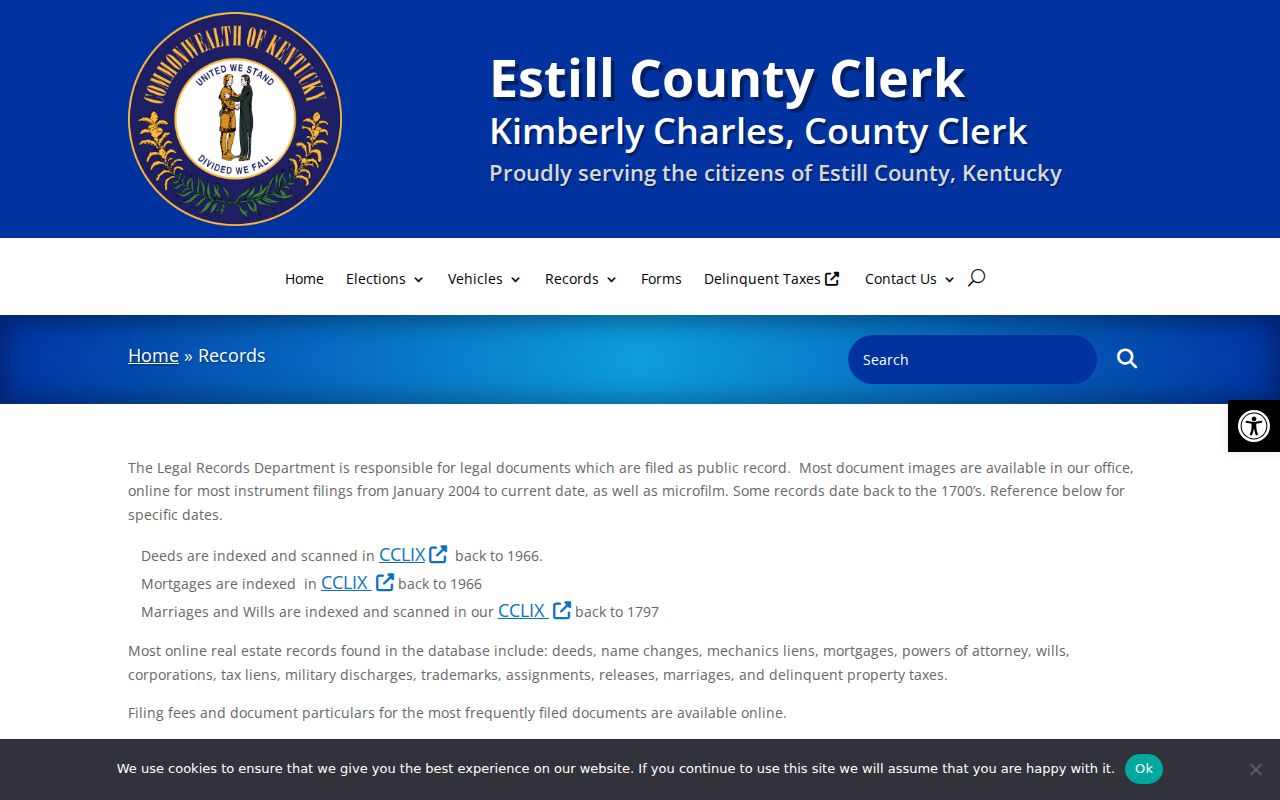
The Clerk is the custodian source. Whatever a portal shows, carry the result back to the matching recorded instrument before treating it as final.
Match the Estill Legal Description
Names and street addresses change. The legal description is the stronger identity test. It may cite a subdivision lot and block, an acreage tract, a plat, or metes and bounds built from measured courses and landmarks. Estill deeds also name roads, creeks, rivers, and railroads. Compare the newest deed with the PVA parcel and the prior deed rather than trusting the owner's name alone.
- Owner of record
- The person or entity named by a record for its stated date and purpose.
- Vesting
- The way ownership is held, including joint interests or an entity's interest.
- Grantee
- The person or entity receiving an interest in the recorded instrument.
- Situs address
- The property's physical location, which may differ from the owner's mailing address.
Resolve Estill Entity Ownership
A deed may name an LLC, corporation, trust, or estate as grantee. That entity is the owner of record. Do not substitute an officer, registered agent, trustee, beneficiary, heir, or someone with a similar surname. Kentucky's Secretary of State search confirms the entity's spelling. UCC records cover financing statements. They are not a title search.
Probate, foreclosure, partition, or a commissioner's sale can build a chain that no name search reveals. Inspect the court file for context. Then find the deed or other instrument recorded with the County Clerk, because a docket is only a lead and never the final ownership record.
Estill Owner Alerts Add Context
Estill County's Clerk connects property owners to DOC ALERT. It tracks new deeds and mortgages. Enrollment needs just an email and names to watch. When a filing matches, the alert tells the user to review the instrument, checking the property description and the recording details. An alert is a signal, nothing more. It does not decide whether a document is valid or fraudulent. The official DOC ALERT enrollment page for Estill County runs through the Clerk-linked notification service.
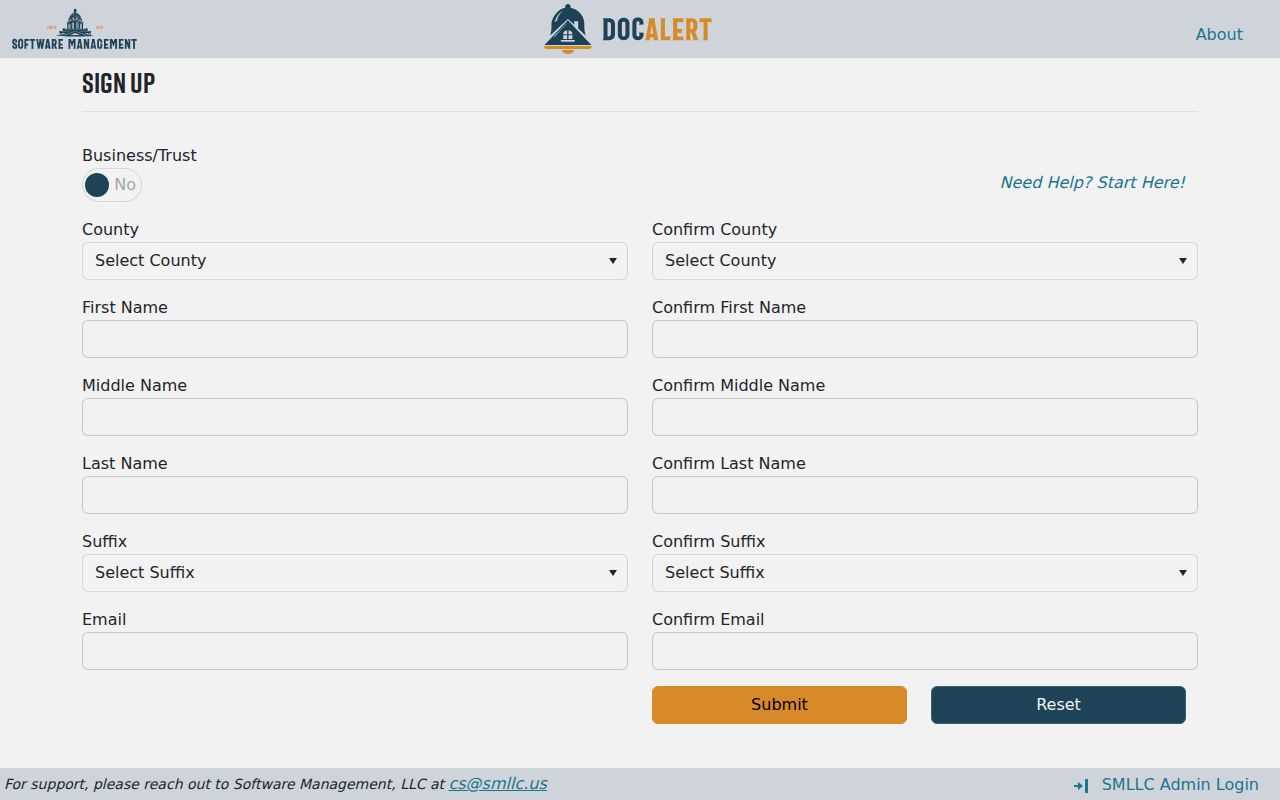
The notice is an early signal only. Ownership still rests on the recorded deed, which remains the document to inspect before drawing any conclusion about an Estill County parcel.
When Estill Online Records Fail
Online access is one channel among several. The County Clerk offers free in-office indices. The PVA works from Courthouse Room 104. That office sits at 130 Main Street in Irvine, and staff answer at 606-723-4569 during posted weekday hours. The Clerk counter can also open index and image access beyond the free account's practical limits. A written request should be precise. Name the address, the APN, the record type, and the date span, and say whether inspection or a copy is wanted.
Older ownership questions reach further. KDLA's land inventory, FamilySearch's catalog, the Estill County Public Library's newspapers and microfilm, and the Estill Historical & Genealogical Society's finding aids can all surface spelling or date clues. Still, the claim should return to an original deed, will, or court order.
Limits on Estill Owner Results
A public record names the owner of record. That is the limit of it. The record cannot prove who lives on the parcel, expose an entity's beneficial owners, settle an unrecorded claim, or replace a professional title examination. Kentucky's Safe at Home program offers substitute-address protection for eligible participants. Real-estate holdings are exempt from address substitution. Other rules may still allow redaction of sensitive data.
When a current result is blocked or missing, write down the source, the query, and the date. Absence is not proof. Confirm the parcel with the custodian, and share only what the lawful property purpose requires.
Lawful use. Estill County owner records support purchase checks, estate work, and boundary questions. Never use them to stalk, harass, or harm anyone.
Online tools sometimes fall short. Note the exact query and date whenever the owner of record cannot be confirmed through an Estill County property search. Call the PVA for the parcel snapshot. Use the Clerk's free counter index for the newest deed, and ask that office for older images or microfilm as needed. KDLA, FamilySearch, the local library, and the Estill County historical society supply historic leads, but a newspaper notice or abstract must be traced back to the original property records. A missing image just ends the remote channel.